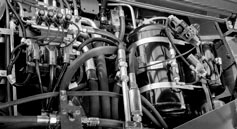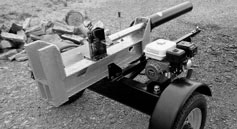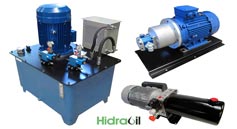
Start with splitting force and operating speed
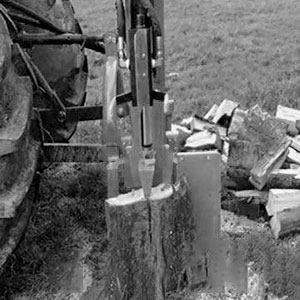
A tractor-powered log splitter can use the PTO to drive a hydraulic pump. Before choosing components, define the splitting force and cylinder speed needed for the application. Timber type and size affect the load: a machine intended for pine does not necessarily face the same requirements as one splitting harder wood. This guide supports hydraulic component selection; the frame, guards and controls require suitable machine design and integration.
Hydraulic cylinder: bore and pressure
Extension force depends on piston area and the effective pressure difference. Select cylinder bore and working pressure together, also checking stroke, mountings and mechanical loads. The table provides approximate reference forces in kilogram-force (kgf), not kilograms of mass. These are rounded indicative figures; losses, backpressure and actual operating conditions can reduce the available force.
| Cylinder bore [mm] | Approximate force at 100 bar [kgf] | Approximate force at 160 bar [kgf] |
|---|---|---|
| 32 | 800 | 1280 |
| 40 | 1250 | 2000 |
| 50 | 1950 | 3100 |
| 60 | 2800 | 4500 |
| 70 | 3850 | 6150 |
| 80 | 5000 | 8000 |
| 100 | 7850 | 12500 |
| 120 | 11300 | 18100 |
Pump and PTO gearbox: flow determines the cycle
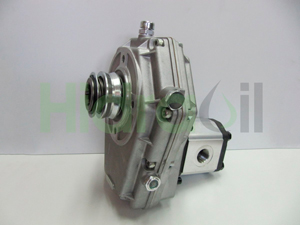
The flow reaching the cylinder determines its speed. More flow produces faster movement, provided the circuit and machine permit it. Select the gear-pump and PTO speed-increasing gearbox assembly for PTO speed, required flow and operating pressure. Available tractor power must also be checked: increasing flow does not remove the power requirement.
Reservoir capacity and temperature control
As an initial reference, the example pairs a 50 l/min pump at a 540 rpm PTO speed with a reservoir of around 75 litres: 50 × 1.5. This volume guideline is not a fixed thermal sizing rule. Prolonged operation or high working pressure can require a larger volume or an oil cooler in the return line. Intermittent, less demanding operation may have different requirements. Define usable reservoir capacity from the duty cycle, heat dissipation and air-separation needs.
Pipework and hoses for the actual flow
Size the complete oil path, not just the pump outlet. Hoses, fittings and valve passages must carry working and return flows with acceptable pressure losses. A case such as 60 l/min through 3/8-inch hoses needs careful assessment of velocity and losses; do not choose hose bore solely from the component thread size. Also consider the pump’s inlet conditions.
Directional valve for cylinder advance and return
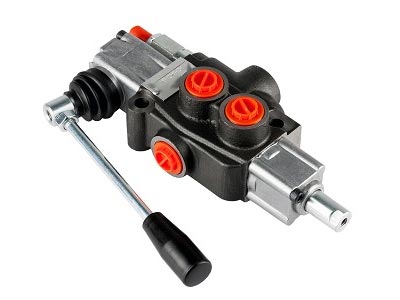
Dedicated log-splitter directional valves are available. Some arrangements provide manually operated advance, automatic return and a change to neutral at the end of travel, unloading oil to the reservoir according to the circuit design. Check the exact function and maximum flow of the chosen model. Automatic return does not permit hands to enter the splitting area while movement remains possible: controls and guards must suit the complete machine’s safe design.
Suction and return filtration
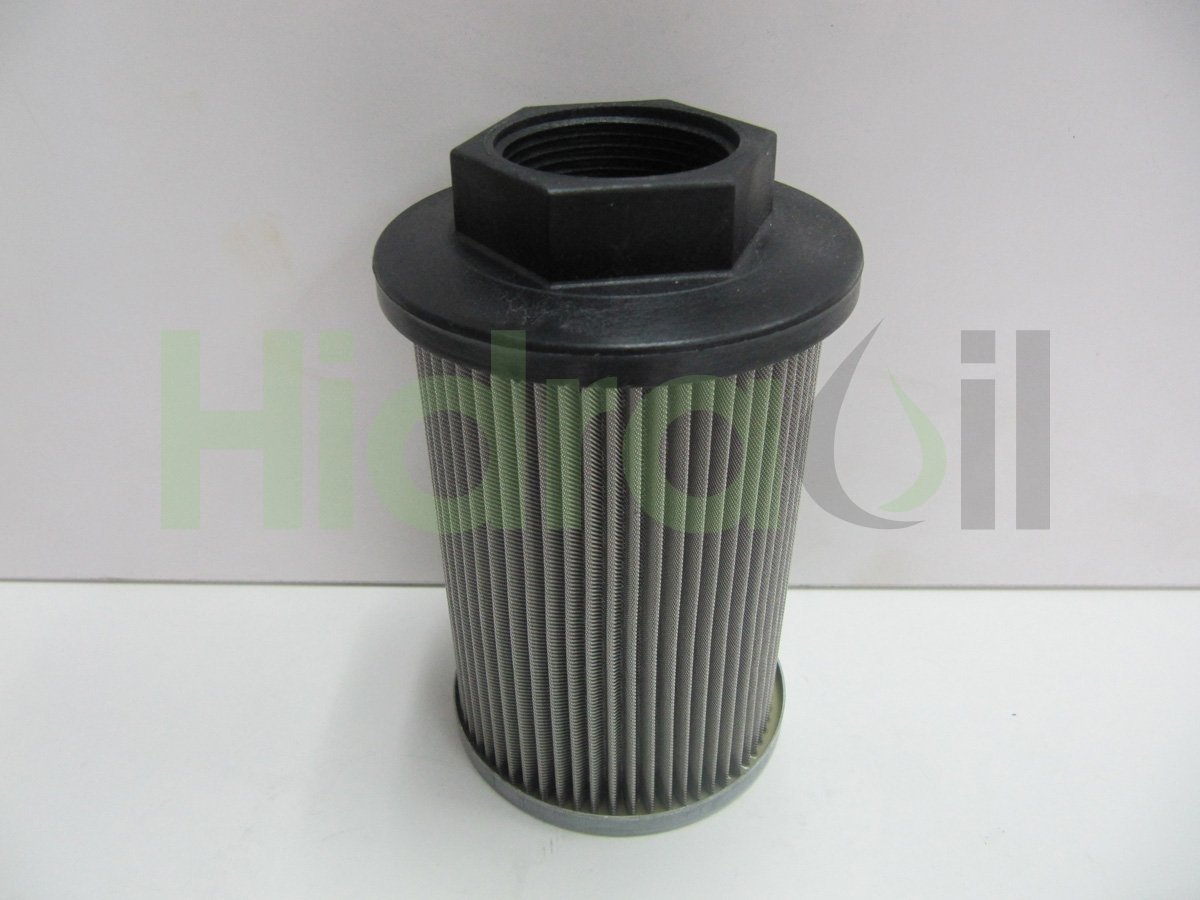
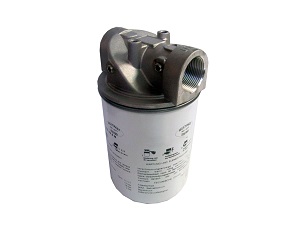
Oil contamination is an important cause of hydraulic failures. Select filtration to meet component requirements and the maintenance plan. Suction options include submerged strainers and external in-line filters, including spin-on types; external units are generally more accessible for replacement. An undersized or blocked inlet filter can impair pump supply. Return filtration can use in-line housings with replaceable elements or filters mounted in the reservoir cover. The need for pressure-line filtration must be assessed for the particular circuit.
Check the selection as a complete system
Cylinder, pump, gearbox, directional valve, reservoir and filters must work together. Check force, speed, pressure, flow and power alongside mechanical strength and machine safety. To identify suitable parts, provide Hidraoil with cylinder bore and stroke, desired operating speed and the available tractor data. Matching connection sizes alone does not establish component compatibility.