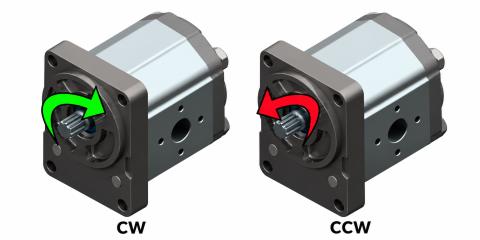
Hydraulic pump displacement is the volume moved per revolution. Combining displacement with rotational speed gives theoretical flow. If the manufacturer's data is unavailable, gear dimensions can provide a geometrical estimate, provided the measurements are correctly identified.
Measurements needed for displacement estimation
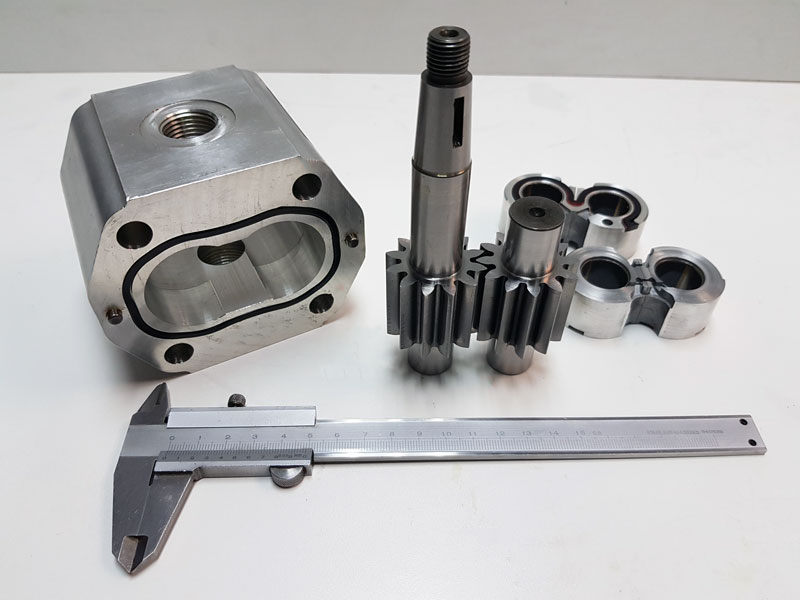
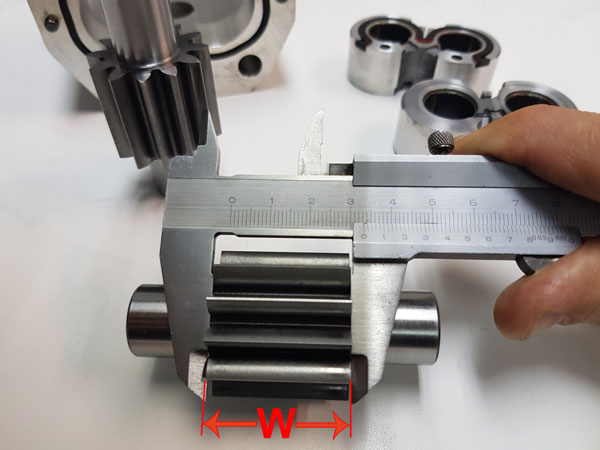
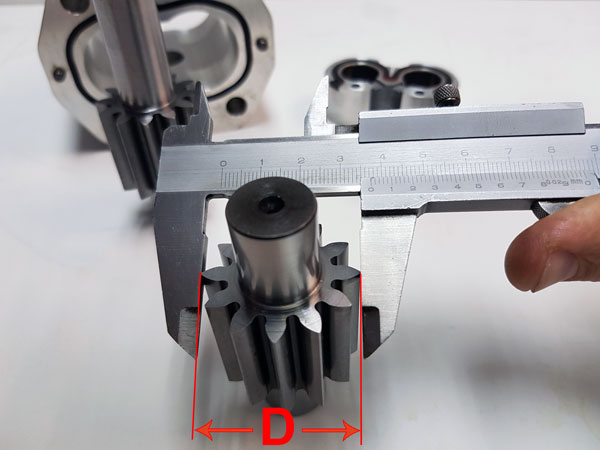
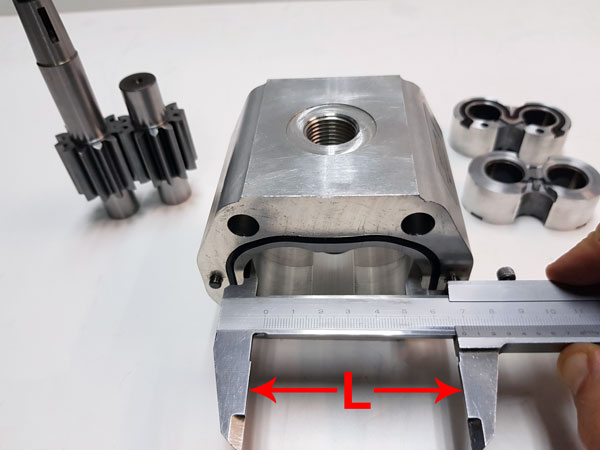
Use the three dimensions shown in the diagrams, all in millimetres. L is the housing dimension illustrated: do not substitute an unrelated external body dimension or a centre distance without checking the drawing.
- W: gear width.
- D: outside gear diameter.
- L: the housing measurement indicated in the diagram.
Approximate displacement formula
For the geometry represented by this calculator:
Vg = (π / 2000) × W × [D² − (L − D)²]
With W, D and L in mm, Vg is expressed in cm³/rev, also written cc/rev. This is a geometrical approximation, not a measurement of actual flow or a conclusive pump identification. Measurements must match the diagram and describe valid geometry; recheck questionable dimensions rather than forcing a result.
Calculate flow from displacement
The theoretical relationship between displacement and speed is:
Q = Vg × n / 1000
Q is flow in litres per minute, Vg is displacement in cm³/rev and n is speed in rpm. For example, a displacement of 10 cm³/rev at 1,500 rpm gives 15 l/min theoretical flow. This example explains the units; it is not a guaranteed rating for a particular pump.
Gear-pump displacement estimate
Estimated displacement:
Enter the values to calculate.
This geometric result is approximate. Confirm the displacement in the manufacturer’s data.
Theoretical pump flow
Theoretical flow:
Enter the values to calculate.
Theoretical flow before volumetric losses.
Interpreting the result
Actual delivery depends on volumetric efficiency and operating conditions, including pressure, oil temperature and viscosity. The theoretical figure must therefore not be treated as guaranteed flow when choosing a replacement or used alone to size a hydraulic installation.
Check the calculation against the pump reference and manufacturer data. To identify a unit, collect photographs of its identification plate, shaft, mounting flange and ports, together with dimensions and working speed. Any dismantling needed for measurement must be undertaken by competent personnel with the equipment made safe.