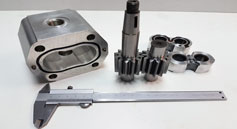
In hydraulics, pump and motor rotation is defined by looking from the end of the shaft towards the body of the unit. This is the shaft-end view: the shaft points towards the observer.
Clockwise and counterclockwise rotation
- Clockwise — CW, or right-hand rotation: the shaft turns in the same direction as a clock's hands. This is the first image, with the green arrow.
- Counterclockwise — CCW, or left-hand rotation: the shaft turns in the opposite direction. This is the second image, with the red arrow.
From the rear cover, the same rotation appears reversed. Before describing a unit as clockwise or counterclockwise, always check that you are viewing it from the shaft end.
Gear pumps: suction and delivery
A pump receives mechanical motion through its shaft and delivers pressurised oil. Suction is the oil inlet; delivery is the outlet to the hydraulic circuit.
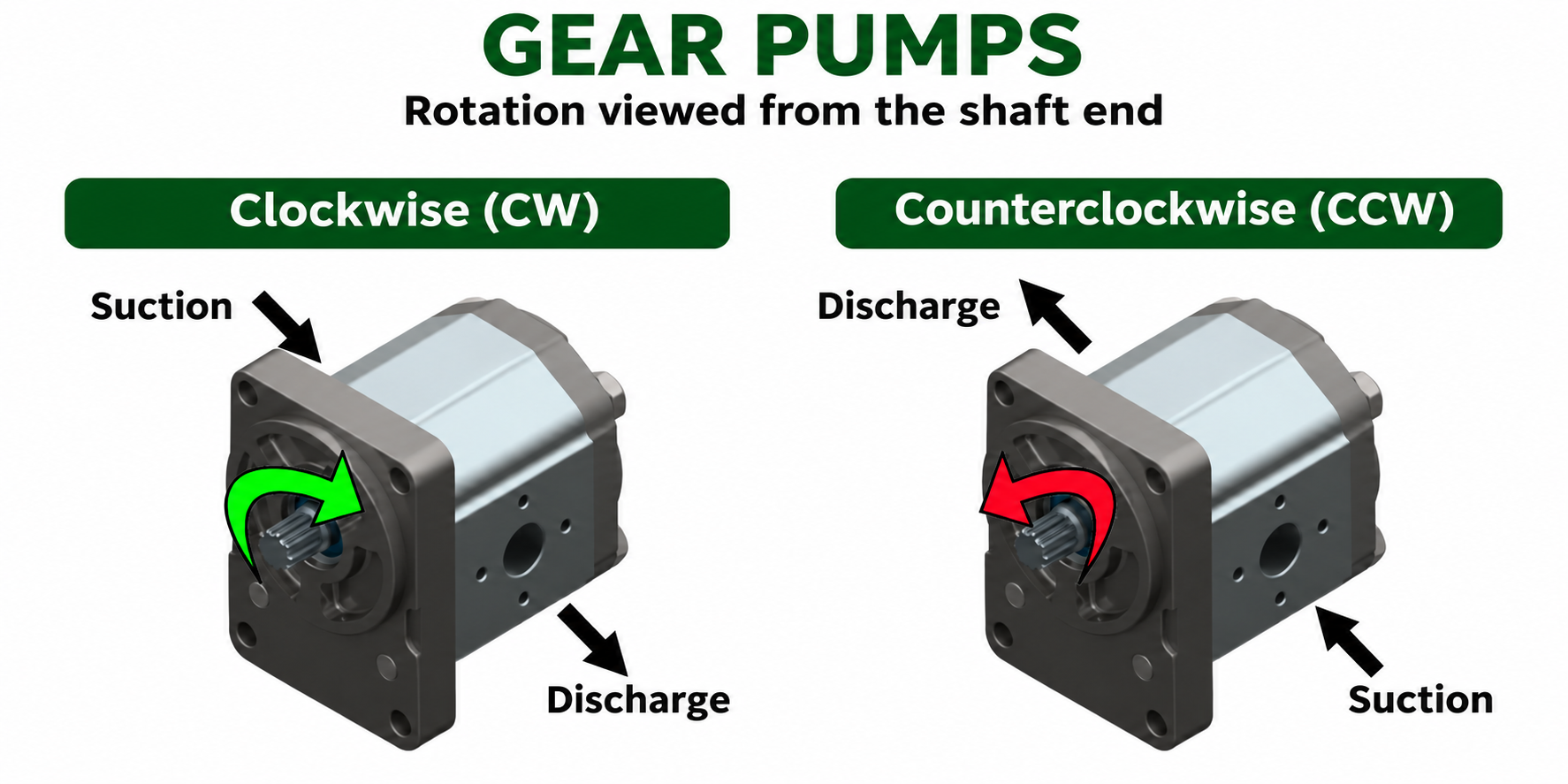
In the arrangement shown, the clockwise pump draws oil through the port indicated at the top and delivers it through the lower-right port. With counterclockwise rotation, the ports exchange functions. The port arrows show oil flow; the coloured arrow shows shaft rotation.
Gear motors: pressure inlet and return
A motor performs the opposite energy conversion: it receives pressurised oil and produces shaft rotation.
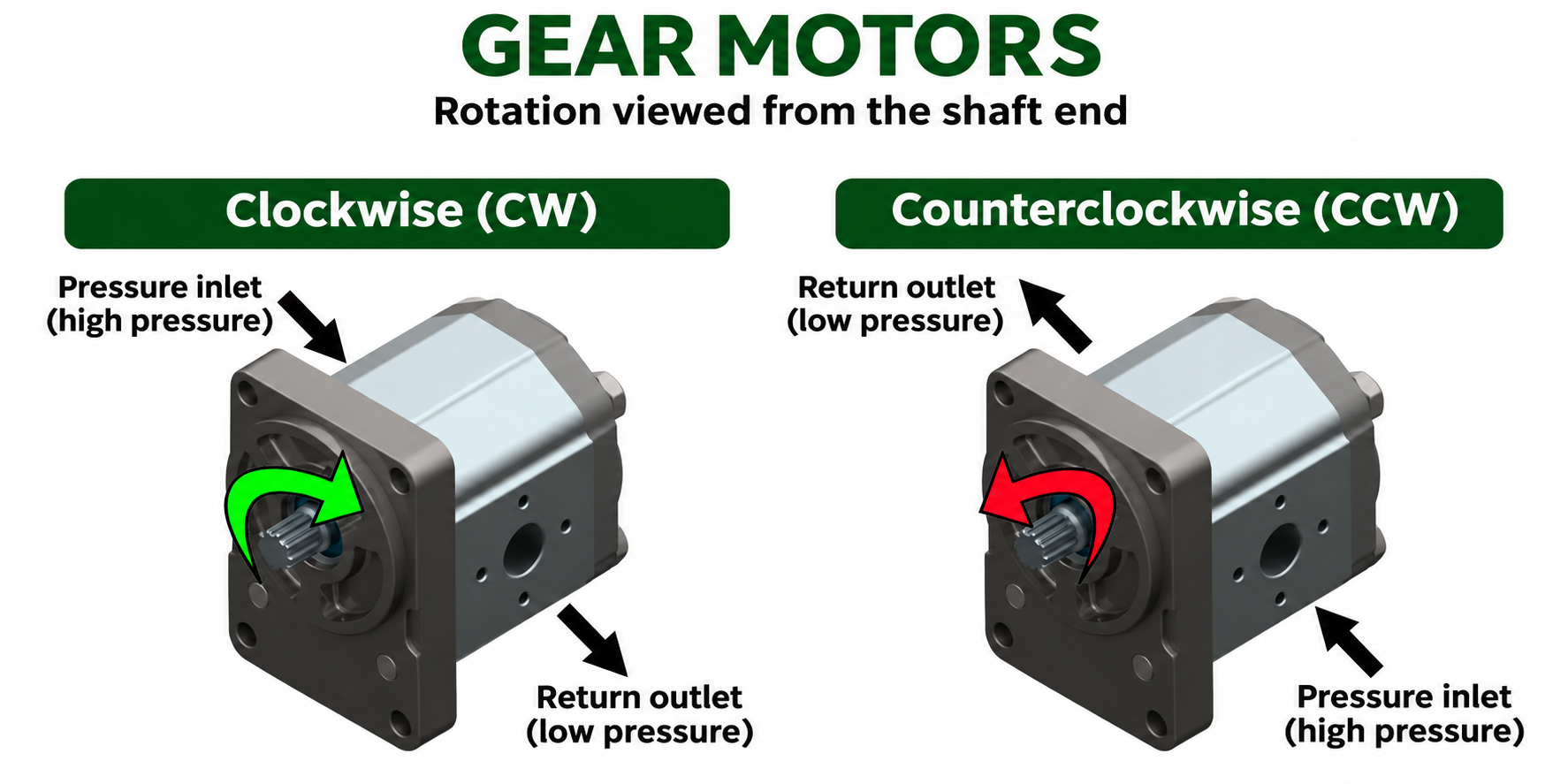
For the same arrangement and shaft rotation, the pressure function changes, not the direction of the flow arrows: the pump's suction port becomes the motor's pressure inlet, while the pump's delivery port becomes the motor's return outlet. Motor ports are therefore described as pressure inlet and outlet or return, rather than suction and delivery.
What to check when choosing a replacement
Identify rotation from the shaft end and confirm the ports in the model's technical data. The illustrated positions are not a universal port-location rule. Nor can every version operate in both directions or have its connections reversed without other changes.
Read our guides to hydraulic pumps and hydraulic motors, or find your model in the pump and motor categories.